The Inner West has become one of the most influential regions in Sydney’s residential market, especially in the years following the pandemic. As people reconsidered how their homes should support work, leisure, and wellbeing, the area emerged as a focal point for ambitious redesigns and lifestyle driven transformations. Many homeowners turned to experts in home renovation across Sydney to reimagine the possibilities of their existing spaces, particularly in suburbs dominated by character filled but often ageing properties.
The result is a wave of renovations that extend far beyond cosmetic improvements. The Inner West is setting new expectations for what homes must deliver in a post COVID world. Spaces are being adapted for productivity, heritage structures are being sensitively modernised, and sustainability driven choices are becoming integral to design. In reshaping their own homes, Inner West residents are also influencing broader patterns across Sydney’s housing market and construction industry.
Hybrid Living and the New Spatial Priorities
One of the most notable shifts in remote work is the move toward flexible living spaces that accommodate remote work without sacrificing comfort. The early pandemic years made evident that traditional layouts with enclosed rooms or narrow corridors were not always suited to modern demands. As a result, renovations commonly introduce multipurpose rooms that serve as offices by day and family spaces by evening. Homeowners embrace attic conversions, sunrooms, or rear extensions that bring natural light into newly designated work zones.
Designers in the Inner West often describe these upgrades as spatial recalibrations that emphasise adaptability. Instead of separating personal and professional life with strict physical boundaries, the aim is to create a home that breathes with the rhythms of everyday activity. This approach has become so influential that it now shapes broader architectural discussions across Sydney. The Inner West has become a model for these fluid interior strategies, proving that even modest properties can be transformed into multifunctional havens.
Heritage Renewal and Contemporary Comfort
The Inner West is celebrated for its period architecture, with rows of terraces and cottages that speak to Sydney’s nineteenth century urban evolution. However, many of these homes were not constructed with modern standards of insulation, ventilation, or energy performance in mind. Renovations in the region increasingly focus on bringing these historic buildings into the present without compromising their charm. Double glazed windows, discreet internal strengthening, improved roofing structures, and carefully selected finishes help retain the familiar aesthetic while dramatically improving liveability.
These heritage centred renovations have had a strong influence on property values and market behaviour across Sydney. Buyers are paying a premium for dwellings that remain true to their historic identity yet provide contemporary functionality. The success of these projects demonstrates that older housing stock does not need to be replaced to meet modern expectations. Instead, the Inner West shows that thoughtful design can bridge past and present.
Outdoor Living and the Reimagined Urban Home
The pandemic underscored the importance of outdoor space as a restorative retreat, especially in areas where backyards tend to be compact. In response, Inner West renovations increasingly emphasise courtyards, balconies, and rooftops as essential living spaces. Homeowners are turning small exterior areas into green pockets for relaxation, exercise, and gatherings. Simple additions such as enhanced lighting, textured paving, or lush plantings can significantly elevate the experience of daily life. For many residents these spaces offer a sanctuary that softens the intensity of urban living.
This heightened appreciation for outdoor environments has reshaped the design philosophy of Inner West projects. Rather than treating exteriors as secondary considerations, renovators now aim for a strong flow between indoors and outdoors. Large sliding doors, kitchen serveries that open to dining terraces, and greenery that appears to spill from outside to inside are becoming common. This seamless connection contributes to a more holistic sense of home and drives a broader trend across Sydney to integrate natural elements wherever possible.
Sustainability as a Core Renovation Principle
Environmental awareness has grown significantly among Inner West homeowners, leading to a marked increase in projects focused on efficiency and ecological responsibility. Solar installations, improved thermal insulation, natural ventilation strategies, and energy saving appliances are becoming standard inclusions. Renovations often incorporate natural materials that promote longevity and reduce waste. These choices not only lower ongoing utility costs but also align with Sydney’s wider environmental goals.
The real estate impact of this shift is already apparent. Properties with sustainable features attract strong interest from buyers who are concerned about long term affordability and environmental stewardship. Analysts at Domain and CoreLogic have noted higher engagement levels for listings that highlight energy efficient upgrades. The Inner West is helping to normalise sustainability as a non-negotiable feature rather than a premium add on, and the ripple effect is influencing renovation priorities throughout Sydney.
Kitchen Centred Homes Reflect Evolving Lifestyles
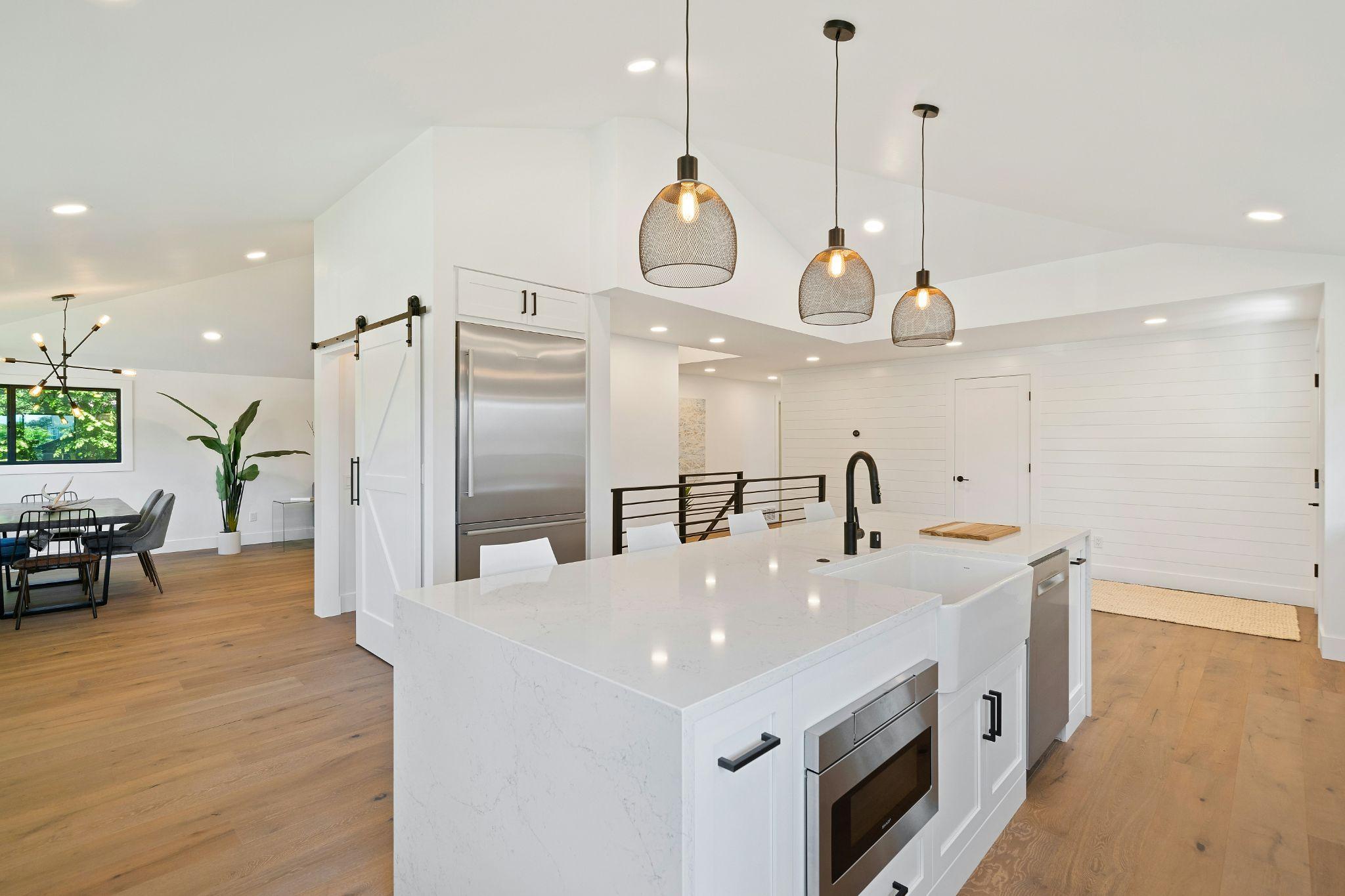
During the years when people spent much more time at home, the kitchen evolved from a utilitarian space into a central hub for family connection, creativity, and comfort. This change remains visible in Inner West renovations today. Residents are investing in enlarged kitchen areas, generous benchtops, concealed storage, and integrated appliances that support both everyday meals and relaxed entertaining. The modern Inner West kitchen often opens directly to a living or dining zone, reinforcing its role as the heart of the home.
These upgrades hold strong appeal for prospective buyers and have become a signature element of high performing renovations in the region. The Housing Industry Association NSW consistently reports that kitchen improvements yield some of the most significant returns on investment. The Inner West’s focus on spacious, functional, and beautifully crafted kitchens has contributed to a broader market expectation across Sydney that homes must facilitate not only nourishment but also social interaction and emotional connection.
Renovated Homes and the New Sydney Market Landscape
The collective effect of these renovation trends has reshaped the property climate of the Inner West and influenced the direction of Sydney’s market as a whole. Renovated homes tend to sell more quickly and command stronger prices because they represent the ideals of post COVID living. Buyers increasingly prioritise adaptability, sustainability, natural light, outdoor connection, and aesthetic harmony between old and new. These values are strongly embodied in Inner West design culture.
As a result, suburbs such as Marrickville, Petersham, Annandale, Leichhardt, and Stanmore have experienced heightened demand. Renovations in these areas set benchmarks that ripple into surrounding regions, encouraging more homeowners to upgrade rather than relocate. The Inner West has effectively become a catalyst for Sydney’s broader housing transformation. Its homes offer a preview of what urban living can look like when practicality, beauty, and resilience are brought together with intention.
Conclusion
The post COVID housing boom in Sydney cannot be understood merely through the lens of rising prices or increased demand. It is a story about evolving expectations, shifting lifestyles, and the desire for homes that support both the emotional and practical dimensions of daily life. The Inner West stands at the forefront of this transformation, demonstrating how thoughtful renovations can enrich heritage properties, expand adaptability, and reimagine the meaning of comfort.
By embracing flexible interiors, revitalised outdoor areas, sustainable technologies, and meticulously updated period features, Inner West homeowners are shaping not only their own environments but also the trajectory of Sydney’s future housing landscape. Their choices reflect the values of a city that continues to adapt, innovate, and grow in response to a world forever changed.