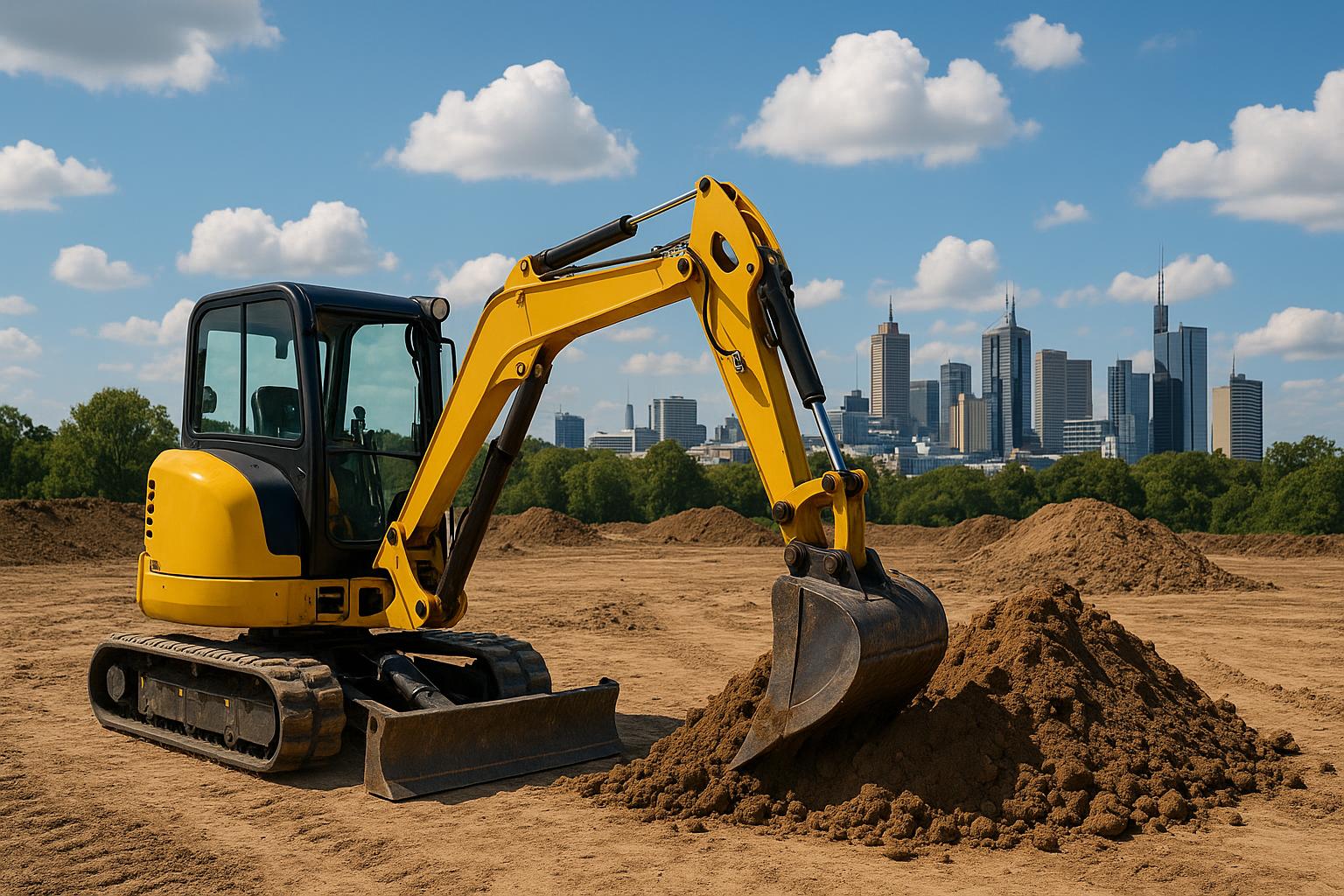
Mini excavators, typically defined as machines weighing under six tonnes, have become a key category within the broader range of construction equipment. Across Australia, their popularity within the hire market continues to grow, largely driven by their compact size and adaptability to urban job sites.
In cities such as Melbourne, where construction often takes place in tightly constrained environments, the demand for smaller, more manoeuvrable machinery has increased significantly. Mini excavators are well suited to these conditions, allowing contractors to work efficiently in areas where access is limited or where larger machines would be impractical.
The compact nature of mini excavators is central to their appeal. Their ability to navigate narrow access points, operate in confined spaces, and even function indoors makes them particularly useful for residential and inner-city projects. This is equally relevant in regional hubs like Geelong, where a mix of new developments and established neighbourhoods creates similar spatial challenges.
For smaller-scale work, such as home renovations or landscaping, mini excavators in the sub-2 tonne range are commonly hired by homeowners and contractors alike. Their use can reduce the need for manual labour, helping to lower overall project costs while improving efficiency. Advances over the past decade have also significantly improved their power-to-size ratio, allowing these machines to perform tasks that were once limited to larger equipment.
Modern mini excavators are no longer single-purpose machines. With the addition of hydraulic attachment systems, they can be adapted to carry out a wide variety of tasks including digging, drilling, compacting, grading, and material handling. Attachments such as augers, compactors, rippers, crushers, and hydraulic hammers can typically be fitted quickly, often without the operator needing to leave the cab. In Australia’s hire market, these attachments are usually available as part of a package or as optional add-ons.
Another advantage of mini excavators is their reduced impact on the surrounding environment. Their lighter weight and the use of rubber tracks help minimise ground disturbance, making them suitable for use on sensitive surfaces such as landscaped areas, paved zones, or timber decking. This is particularly beneficial for projects in residential suburbs or public spaces where preserving existing surfaces is important.
Sustainability is also influencing equipment trends. Manufacturers are increasingly investing in electric mini excavators as part of broader efforts to reduce emissions. These electric models are now available in Australia and are gaining traction, especially in urban environments where low noise and zero on-site emissions are valued. This aligns with stricter environmental expectations in cities and growing communities.
Transport and logistics further contribute to the appeal of mini excavators. Unlike larger machines, they can often be transported using standard trailers or light vehicles, simplifying movement between sites. For contractors requiring excavator hire in Melbourne and Geelong, this ease of transport can translate into time and cost savings.
Overall, compact machinery, particularly mini excavators, is becoming the preferred choice for many urban construction projects. Their combination of versatility, efficiency, and practicality ensures they remain a central part of Australia’s evolving construction landscape.