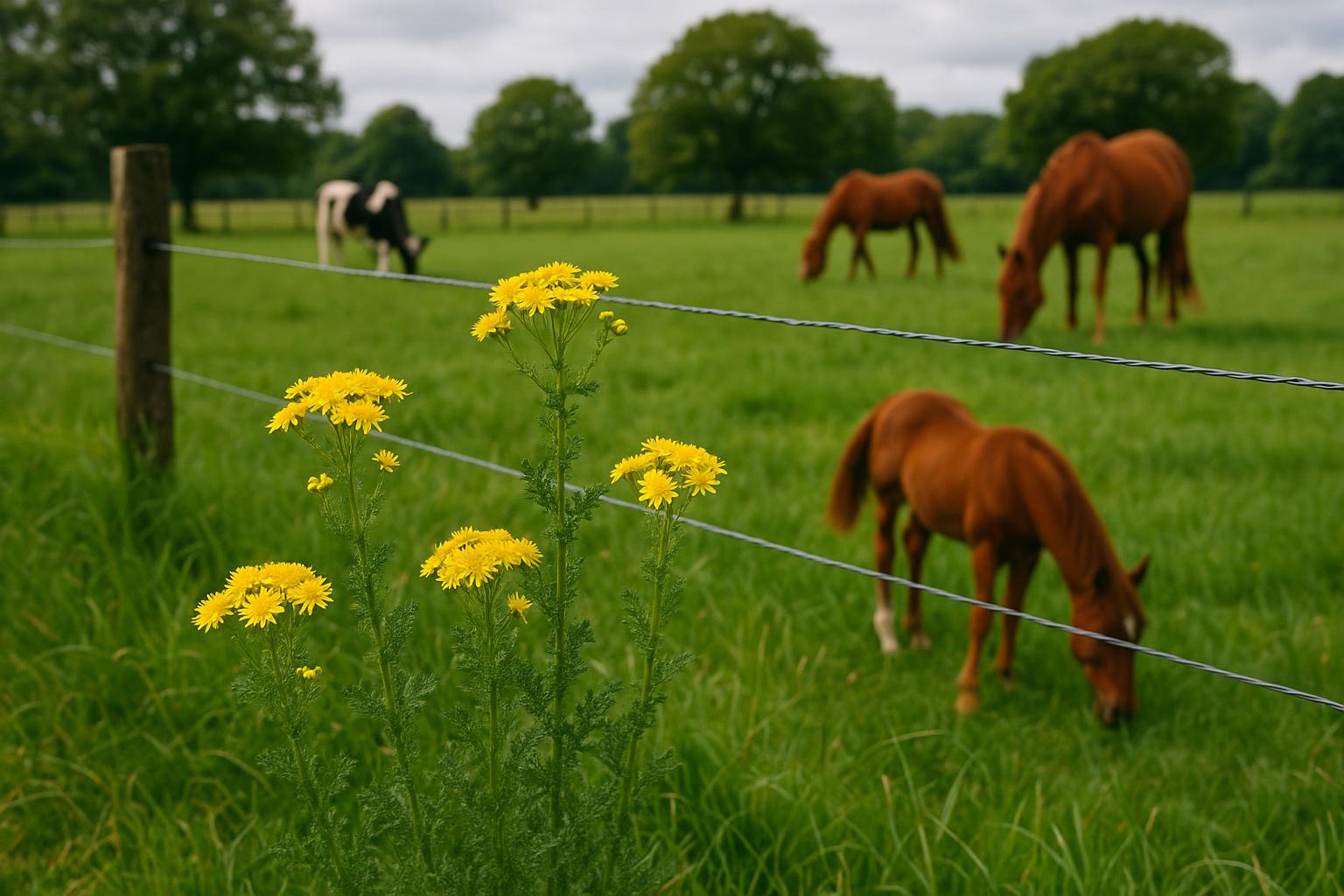
Ragwort is a major weed in Australia’s higher-rainfall grazing country, particularly in southern Victoria and Tasmania. It crowds out good pasture, spreads quickly by seed and is toxic to cattle and horses. For farmers and lifestyle property owners, getting on top of it means managing the plants you can see, stopping new ones from setting seed, and keeping your stock safe while you do it.
Identify Ragwort Early
Ragwort usually lives for two years. In its first year, it forms a flat rosette of ruffled, deeply cut leaves close to the ground. In its second year, it sends up stiff, upright stems topped with clusters of bright yellow, daisy-like flowers.
Some other plants, such as fireweed and native groundsels, look similar. If you’re not sure what you’ve found, take a sample to your local council or agriculture department so they can confirm it before you treat it.
Finding ragwort early matters because it produces a huge amount of seed. An average plant produces 60,000 to 70,000 seeds and a large plant up to 250,000, and that seed can survive in the soil for 8 to 16 years. Wind, water, animals, machinery, and hay can carry the seed to new areas, so if you let a few plants flower, they can become a much bigger problem. In Victoria and Tasmania, ragwort is a declared weed, and landholders must control it on their land.
Protect Your Livestock
Ragwort is more than a pasture problem, as it can make your stock seriously ill. It contains toxins that slowly damage the liver, and cattle and horses are the most at risk. Sheep and goats are around ten times more tolerant. Symptoms can take anywhere from a few weeks to a year to show, so by the time an animal looks unwell, the liver damage has often already happened. Dairy cows that eat ragwort can also produce tainted milk.
Stock usually avoid fresh ragwort when they have plenty of other feed, but they’ll eat more when pasture runs short. They also find wilted ragwort more appealing, including plants you’ve sprayed. In hay or silage, stock can’t pick ragwort out, and the toxins remain. After any herbicide treatment, keep stock out for the withholding period on the label, and only buy hay from paddocks you know are free of ragwort.
Choose the Right Control Method
Ragwort can regrow from its crown and roots as well as from seed, so one method on its own rarely clears it. The best approach depends on how much ragwort you have, what stage it’s at and the stock you run, and most properties get the best results by combining a few methods over several seasons.
Hand-Pulling Small Patches
On small patches, you can dig or pull the plants out. Remove the crown and as much root as you can, because ragwort can regrow from any pieces that stay in the soil. Wear gloves, bag any flowering plants so the seed doesn’t spread, and remove the plants from the paddock so stock can’t eat them as they wilt.
Avoid Relying on Slashing
Slashing or mowing stops plants flowering for a while, but it doesn’t kill them. If you cut ragwort repeatedly, it can stop dying off after two years and keep regrowing year after year, so only use slashing alongside other methods.
Spraying Ragwort
Selective herbicides work best on ragwort rosettes, before the plants send up flowering stems. Choose a product registered for ragwort in your state and follow the label for rates, timing and withholding periods.
Broadleaf herbicides such as 2,4-D can also kill clover, so check how a product affects your pasture before you spray a whole paddock. Seed in the soil will also keep producing new seedlings, so you’ll usually need to follow up after the first spray.
Wiping Taller Ragwort
Once ragwort sends up its flowering stems, it usually stands well above the surrounding pasture. This makes it a good target for wiping, which puts herbicide only on the taller weeds instead of across the whole paddock.
A Weedwiper carries two rows of thick wicks that stay soaked with herbicide without dripping onto the pasture. You set the wicks just above the grass, and as you drive through the paddock, they wipe the taller ragwort while the shorter grass and clover underneath stay untouched. A bruise bar at the front damages each plant first, so it absorbs more herbicide. Because the chemical only reaches the weeds, you can use glyphosate or a selective ragwort herbicide without harming your pasture, and you don’t have to worry about spray drift.
To get the best kill:
- Wipe while the plants are actively growing and before they set seed
- Graze the paddock down first, so you can set the wicks lower for better contact
- Keep the wicks very wet but not dripping
- Drive at around 10 km/h, and slow down in thick patches
- Wipe from two directions to cover both sides of each plant
Wiping won’t reach young rosettes that lie flat on the ground, so spot-spray or hand-pull those plants instead.
Improve Pasture and Keep Checking
Killing the plants you can see is only part of the job, as ragwort quickly takes hold in thin, overgrazed or disturbed pasture. A thick, healthy pasture leaves new seedlings very little room to grow. Avoid grazing paddocks down to bare ground, give treated areas time to recover and resow thin patches. If your country suits sheep, grazing them alongside or after cattle can also help keep ragwort numbers down.
Seed in the soil will keep producing new plants for several years, so walk your paddocks regularly, especially after rain. Check fence lines, gateways and areas where ragwort has grown before. A simple record of where you find it and how you treated it will show you which areas need the most attention each season.
Stay on Top of Ragwort Each Season
Ragwort control is a long-term job, but it gets easier each year once you stop plants from setting seed. Identify plants early, keep cattle and horses away from treated ragwort, choose the right method for each growth stage and keep your pasture strong, and you’ll steadily reduce ragwort across your grazing paddocks.
Image: please use the product image from https://www.redbackagri.com.au/product/weedwiper/ if possible.