Perth’s scorching summers and surprisingly chilly winters make a reliable air conditioning system an absolute necessity for comfortable living. Choosing the right unit, however, involves more than just picking a brand or a price tag. It requires careful consideration of your home, your lifestyle, and the unique climate of Western Australia. Learn more about professional air conditioning perth.
Making an informed decision now can save you a significant amount of money and discomfort down the track. From understanding energy ratings to understanding energy ratings to choosing the right system type and installer, each step plays a crucial role in ensuring your home remains an oasis of comfort year-round. Let’s delve into these smart tips to help you make the best decision for your Perth property.
1. Decode Energy Ratings and Prioritise Efficiency
The first crucial step in selecting an air conditioning system for Perth’s demanding climate is to understand and prioritise energy efficiency. Air conditioning is a significant contributor to household energy consumption, especially during prolonged heatwaves. Therefore, a higher energy-rated unit can translate into substantial long-term savings on your electricity bills. Look for the Australian Energy Rating Label on any unit you consider. This label provides two key metrics:
- EER (Energy Efficiency Ratio) for Cooling: This indicates how efficiently the unit cools. A higher EER means better cooling efficiency.
- COP (Coefficient of Performance) for Heating: As most modern systems are reverse cycle, they also provide heating. A higher COP signifies better heating efficiency.
The star rating system, displayed prominently on the label, offers an easy-to-understand visual guide. More stars mean greater energy efficiency. While a unit with more stars might have a slightly higher upfront cost, the savings on your energy bills over its lifespan, particularly in Perth where air conditioning is used extensively, will often far outweigh the initial investment. Beyond the star rating, consider systems with inverter technology. Unlike older, conventional units that cycle on and off at full power, inverter air conditioners adjust their compressor speed to precisely match the cooling or heating demand. This constant, modulated operation is far more energy-efficient, quieter, and provides more consistent temperatures. For Perth’s variable temperatures, an inverter system can efficiently handle both extreme heat and milder conditions without wasting energy. Furthermore, if considering a ducted system, inquire about zoned capabilities. Zoning allows you to cool or heat only the areas of your home that are in use, rather than the entire house. This targeted approach can drastically reduce energy waste and is a highly recommended feature for larger Perth homes, offering unparalleled comfort and efficiency.
2. Choose the Right AC Type for Your Perth Home
Perth homes come in various shapes and sizes, from compact apartments to sprawling family residences. Matching the air conditioning system type to your home’s layout, your cooling/heating needs, and your budget is paramount. The primary types available are split systems, ducted systems, and evaporative coolers.
Split Systems: Targeted Comfort
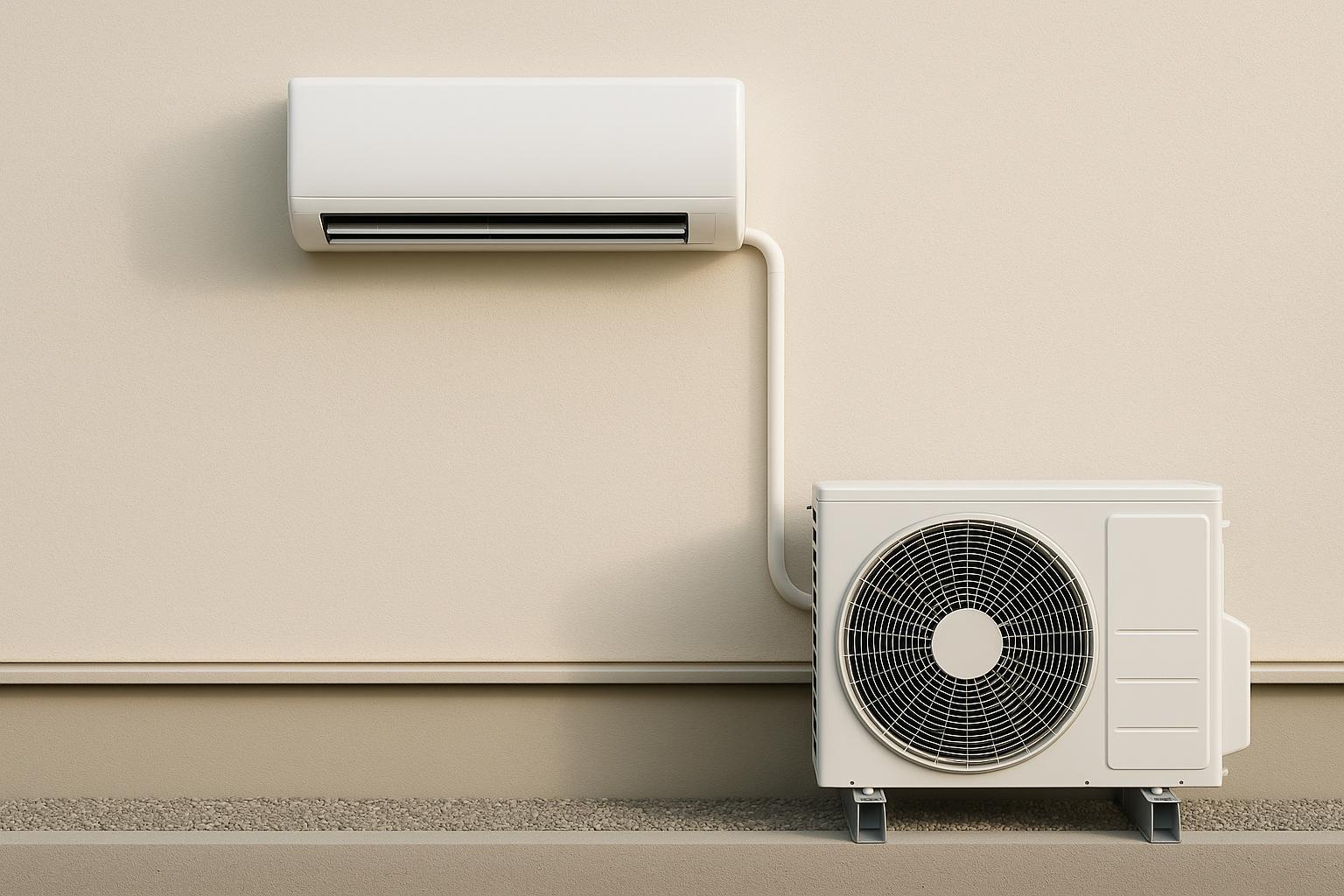
Split systems consist of an indoor unit (mounted on a wall) and an outdoor compressor unit.
- Pros:
- Cost-effective for cooling or heating single rooms or open-plan areas.
- Relatively easy and quick to install.
- Can be installed in apartments or smaller homes where a ducted system isn’t feasible.
- Modern units are very energy-efficient and quiet.
- Cons:
- Only provides comfort to the specific area where it’s installed.
- Multiple units are needed to cool an entire house, which can impact aesthetics and overall cost.
Perth Relevance: Ideal for bedrooms, living rooms, or home offices where individual climate control is desired. They are a popular choice for renters or those on a tighter budget looking to cool specific hotspots.
Ducted Systems: Whole-Home Climate Control
Ducted air conditioning provides seamless, whole-home heating and cooling from a single outdoor unit connected to an indoor unit, typically located in the roof space. Conditioned air is distributed via a network of ducts to outlets in various rooms.
- Pros:
- Provides consistent and even temperature control throughout the entire home.
- Aesthetically pleasing, with only discreet grilles visible.
- Offers zoning capabilities (as discussed above), allowing you to control different areas independently.
- Adds value to your property.
- Cons:
- Higher upfront cost for installation.
- More complex installation, often requiring significant roof space.
- Can be less energy-efficient if not properly zoned and used.
Perth Relevance: The preferred choice for larger family homes or new builds in Perth, offering superior comfort and convenience, especially during extended periods of extreme heat or cold.
Evaporative Coolers: The Eco-Friendly Perth Option
Evaporative cooling works by drawing hot, dry air over water-saturated pads, which cools the air through evaporation. This cooled, moistened air is then circulated throughout the home.
- Pros:
- Significantly more energy-efficient than refrigerative air conditioning, resulting in much lower running costs.
- Introduces fresh, filtered air into the home, rather than recirculating stale air.
- Operates with windows and doors slightly open, which many people prefer.
- Ideal for Perth’s typically dry climate, as it adds beneficial moisture to the air.
- Lower upfront cost compared to ducted refrigerative systems.
- Cons:
- Not effective in high humidity conditions (though rare, Perth can experience humid days).
- Does not provide heating.
- Requires a consistent water supply.
- Can feel less “cold” than refrigerative systems, offering more of a refreshing breeze.
Perth Relevance: A highly viable and environmentally conscious option for many Perth homeowners, especially those who appreciate fresh air and lower energy bills. It excels during the vast majority of Perth’s dry summer days but may struggle during the occasional humid spell. Many Perth residents combine evaporative cooling with a smaller reverse cycle split system for targeted heating or cooling on very humid days. Remember that most modern split and ducted refrigerative systems are reverse cycle, meaning they provide both heating and cooling. Given Perth’s surprisingly cold winters, a reverse cycle system is a highly recommended investment for year-round comfort.
3. Size Your System Correctly for Perth’s Climate
One of the most critical factors often overlooked is correctly sizing your air conditioning system. The “kW” (kilowatt) capacity indicates the system’s cooling and heating power. An incorrectly sized unit will either struggle to cool your home or waste energy, leading to discomfort and higher bills.
Consequences of Incorrect Sizing:
- System is Too Small:
- Will run constantly at maximum capacity, struggling to reach the desired temperature.
- Inefficient operation, leading to higher energy consumption and premature wear.
- Won’t provide adequate comfort during peak Perth summer temperatures.
- System is Too Large:
- Will “short cycle” – turning on and off frequently without running long enough to effectively dehumidify the air.
- Can lead to a clammy, uncomfortable feeling even if the temperature is cool.
- Higher upfront cost for unnecessary capacity.
- Less efficient operation due to constant stopping and starting.
Factors Influencing Correct Sizing:
A professional air conditioning specialist will conduct a thorough assessment, taking into account several factors specific to your Perth home:
- Room Size and Layout: The primary determinant, measured in square meters or cubic meters (length x width x ceiling height).
- Insulation Quality: Well-insulated walls and ceilings significantly reduce heat gain and loss, requiring less cooling/heating power.
- Window Types and Orientation: Large, single-glazed windows, especially those facing north or west, allow considerable heat transfer. Double glazing or effective window treatments can reduce this.
- Ceiling Height: Higher ceilings mean a larger volume of air to condition.
- Number of Occupants: People generate body heat.
- Internal Heat Sources: Appliances (refrigerators, ovens), lighting (especially older incandescent bulbs), and electronic devices contribute to the internal heat load.
- Perth’s Climate Data: The system needs to be powerful enough to cope with Perth’s peak summer temperatures, which can often exceed 40°C.
- Shading: External shading from eaves, pergolas, or trees can significantly reduce solar heat gain.
Recommendation: Never guess the size you need. Always insist on a qualified professional conducting a detailed site assessment to accurately calculate the required kW capacity for your specific home and needs. They use industry-standard calculations to ensure optimal performance and efficiency.
4. Strategic Installation and Placement are Key
Even the most energy-efficient and perfectly sized air conditioning unit can underperform if not installed correctly. Professional installation is not just about getting the unit running; it’s about optimising its performance, longevity, and safety.
Indoor Unit Placement (Split Systems):
- Optimal Airflow: Position the unit to allow for unobstructed airflow across the room, avoiding areas where furniture might block the air path.
- Away from Heat Sources: Avoid placing it near direct sunlight, lamps, or other heat-generating appliances, as this can confuse the thermostat.
- Structural Integrity: Ensure the wall can support the unit’s weight and that drainage can be properly managed.
Outdoor Unit Placement (All Refrigerative Systems):
- Shade and Airflow: Ideally, the outdoor unit should be placed in a shaded area to prevent it from overheating, which improves efficiency. Ensure there’s ample space around it for proper airflow.
- Noise Consideration: Place it away from bedrooms or quiet living areas to minimise noise disturbance. Modern units are quieter, but noise can still be a factor.
- Stable Base: The unit must be installed on a stable, level surface to prevent vibrations and ensure proper operation.
- Accessibility: Allow easy access for future maintenance and servicing.
Ductwork Design and Installation (Ducted Systems):
- Insulation: All ducting should be properly insulated to prevent energy loss as air travels from the indoor unit to the outlets.
- Minimal Bends: Excessive bends or kinks in the ductwork restrict airflow, reducing efficiency and increasing strain on the system.
- Correct Sizing: Ducts must be correctly sized to deliver the appropriate amount of air to each zone or room.
Professional Installation is Non-Negotiable: Only use licensed and experienced air conditioning installers. Incorrect installation can lead to:
- Reduced efficiency and higher energy bills.
- Premature breakdowns and costly repairs.
- Voided manufacturer warranties.
- Safety hazards, particularly with electrical and refrigerant connections.
A reputable Perth installer will conduct a site visit, plan the optimal placement of both indoor and outdoor units, and ensure all electrical and refrigerant lines are safely and correctly connected according to Australian standards.
5. Explore Smart Features and Advanced Controls
Modern air conditioning systems offer a host of smart features that can significantly enhance comfort, convenience, and energy efficiency, making them particularly appealing for tech-savvy Perth homeowners.
- Wi-Fi Connectivity and Smart Home Integration: Many units now come with Wi-Fi modules, allowing you to control your AC remotely via a smartphone app. Imagine turning on your air conditioning on your drive home from work, ensuring your house is cool and comfortable the moment you step inside after a scorching Perth day. Some systems can also integrate with broader smart home ecosystems (e.g., Google Home, Amazon Alexa) for voice control and automation.
- Zoning Capabilities: As mentioned, for ducted systems, zoning is a game-changer. It allows you to create different temperature zones within your home, cooling only the occupied areas. This is incredibly efficient for Perth families whose living patterns change throughout the day.
- Programmable Timers and Sleep Modes: Set your AC to turn on or off at specific times, or to adjust temperatures during the night for optimal sleep comfort and energy saving. Sleep modes often gradually increase the temperature slightly overnight, saving energy without compromising comfort.
- Motion Sensors and Presence Detection: Some advanced units include sensors that detect human presence. If a room is empty for a certain period, the system can automatically switch to an energy-saving mode or turn off, resuming operation when someone returns.
- Humidity Control: While Perth’s climate is generally dry, occasional humid days can occur. Systems with advanced humidity control can help maintain a comfortable indoor environment by extracting excess moisture, even if the temperature setting remains constant.
- Air Purification and Filtration: For allergy sufferers or those concerned about indoor air quality, look for units with advanced filtration systems that can capture dust, pollen, allergens, and even some viruses and bacteria. This is particularly beneficial during Perth’s dusty periods or bushfire season.
These smart features move air conditioning beyond simple temperature control, offering a truly integrated and intelligent climate management solution for your Perth home.
6. Understand Warranty, Maintenance, and After-Sales Support
Investing in an air conditioning system is a long-term commitment, so understanding the warranty, the importance of regular maintenance, and the availability of after-sales support is crucial.
Warranty:
- Length and Coverage: Most reputable brands offer a 5-year warranty on parts and labour. Understand what is covered and for how long.
- Installation Warranty: Ensure your installer also provides a warranty on their workmanship.
- Voiding Conditions: Be aware that DIY repairs or using unlicensed technicians can void your warranty.
- Local Support: Choose brands that have a strong presence and authorised service agents in Perth. This ensures easier access to spare parts and qualified technicians should issues arise.
Regular Maintenance:
Air conditioning systems, like cars, require regular servicing to operate efficiently and extend their lifespan.
- User Maintenance: Regularly clean or replace your unit’s filters as per the manufacturer’s instructions. Dirty filters restrict airflow, reduce efficiency, and can impact air quality.
- Professional Servicing: Schedule professional air conditioning service Perth typically once every 12-24 months. A qualified technician will:
- Check refrigerant levels and connections.
- Clean coils and components.
- Inspect electrical connections.
- Check for leaks and blockages.
- Test overall system performance.
Benefits of Maintenance: Regular servicing maintains efficiency, reduces energy bills, prevents minor issues from becoming major breakdowns, and prolongs the life of your unit – all vital for enduring Perth’s climate.
After-Sales Support:
Choose an installer or supplier who offers reliable after-sales support. This includes being available for warranty claims, routine servicing, and emergency air conditioning repairs Perth. A company with a strong local reputation in Perth is usually a good indicator of reliable support.
7. Get Multiple Quotes and Vet Your Installer
Finally, once you have a good understanding of your needs and the types of systems available, the last step is to get multiple quotes and thoroughly vet your chosen installer.
Comparing Quotes:
Don’t just look at the bottom line. When comparing quotes, ensure they include:
- System Specifications: The exact make, model, and kW capacity of the unit(s).
- Installation Details: A clear breakdown of what the installation involves (e.g., electrical work, pipe length, ducting, outdoor unit base).
- Warranty Information: Both manufacturer and installer warranties.
- Inclusions/Exclusions: What’s covered and what might be an extra cost (e.g., removal of old unit, specific electrical upgrades).
- Energy Efficiency Ratings: Confirm the star ratings of the proposed systems.
A reputable installer will always conduct a thorough site visit to assess your home’s unique requirements before providing a quote. Be wary of installers who offer a quote over the phone without seeing your property.
Vetting Your Installer:
This is perhaps the most crucial step. A poor installation can negate all the benefits of a good quality unit.
- ARC Tick Certification: Ensure the installer holds an ARC Tick licence (Australian Refrigeration Council). This verifies they are legally qualified to handle refrigerants.
- Electrical Contractor License: All electrical work must be carried out by a licensed electrician.
- Insurance: Verify they have public liability insurance.
- References and Reviews: Ask for references or check online reviews (Google, ProductReview, local community groups) to gauge their reputation and customer satisfaction.
- Experience: Inquire about their experience with specific brands and types of systems, particularly in Perth’s climate.
- Clear Communication: Choose an installer who communicates clearly, answers all your questions, and provides detailed, transparent quotes.
Conclusion
Choosing the right air conditioning system for your Perth home is a significant investment that impacts your comfort, energy bills, and property value for years to come. By following these seven smart tips – from understanding energy efficiency and selecting the appropriate system type, to ensuring correct sizing, professional installation, and reliable after-sales support – you can make an informed decision that will keep your home perfectly comfortable, no matter what Western Australia’s weather throws your way. Take your time, do your research, and don’t hesitate to seek expert advice to ensure you get the ideal climate control solution tailored to your specific needs.