


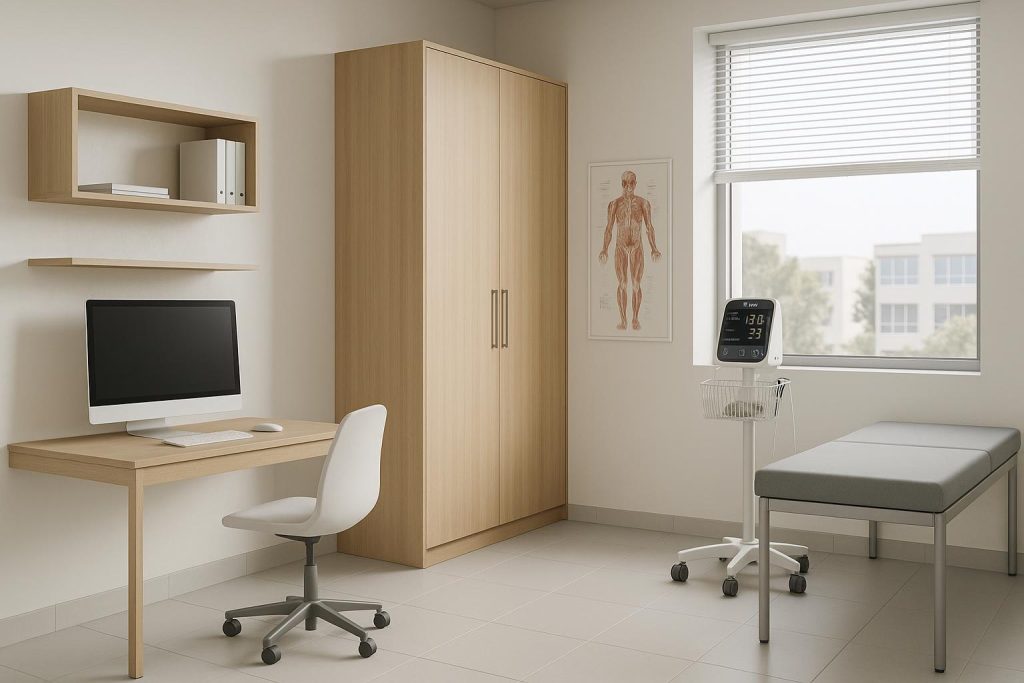
In today’s rapidly evolving healthcare landscape, simply providing excellent patient care isn’t enough. To thrive, practices need to be adaptable, efficient, and patient-centric. One of the most effective ways to achieve this is through strategic designing exceptional medical fitouts that not only meet current needs but also anticipate future demands. This comprehensive guide will walk you through the key considerations for future-proofing your practice with a smart and well-planned fitout.
Think of your practice as a living organism; it needs to grow and adapt to survive. A well-executed fitout can provide the framework for that growth, allowing you to seamlessly integrate new technologies, accommodate changing patient demographics, and optimise workflows. It’s about creating a space that supports your team, enhances the patient experience, and ultimately contributes to the long-term success of your practice. This guide explores how careful planning now can save you time, money, and headaches down the track.
Understanding the changing landscape of healthcare fitouts
The healthcare industry is undergoing constant transformation, driven by technological advancements, evolving patient expectations, and shifting regulatory requirements. These changes have a direct impact on the design and functionality of healthcare spaces. Practices need to be proactive in adapting to these trends to remain competitive and provide the best possible care.
Consider the rise of telehealth, for instance. While face-to-face consultations remain vital, many practices are now incorporating virtual appointments into their service offerings. This requires dedicated spaces for telehealth consultations, equipped with the necessary technology and designed to ensure privacy and confidentiality. Failing to adapt to these changes can leave your practice struggling to meet the evolving needs of your patients.
Key trends shaping medical space design
Several key trends are influencing the design and functionality of modern medical spaces. Understanding these trends is crucial for future-proofing your practice. These include:
- Technology integration: Seamless integration of technology to improve efficiency and patient care.
- Patient-centric design: Creating a welcoming and comfortable environment that prioritises the patient experience.
- Sustainability: Incorporating eco-friendly materials and practices to reduce environmental impact.
- Flexibility and adaptability: Designing spaces that can be easily reconfigured to meet changing needs.
- Infection control: Implementing design strategies to minimise the risk of infection transmission.
These trends highlight the need for a holistic approach to medical space design, one that considers not only the functional aspects but also the emotional and environmental impact of the space. Let’s dive deeper into how these trends can be incorporated into your fitout.
Planning your future-proofed fitout
A successful medical fitout starts with meticulous planning. This involves a thorough assessment of your current needs, future goals, and the specific requirements of your practice. It’s also crucial to engage with experienced professionals who can provide guidance and support throughout the process. This is where a team with expertise in healthcare fitouts can be invaluable.
Think of the planning stage as building the foundation for your practice’s future. A solid foundation will allow you to build a thriving and adaptable practice, while a weak foundation can lead to costly problems down the track. So, where do you start?
Assessing your current and future needs
Before you start designing your new space, take the time to carefully assess your current and future needs. This involves considering factors such as:
- The number of practitioners and staff.
- The types of services you offer.
- Your patient demographics.
- Your growth projections.
- Any planned expansions or new service offerings.
By carefully analysing these factors, you can gain a clear understanding of your space requirements and identify any potential challenges or opportunities. This will inform your design decisions and help you create a space that meets your specific needs.
Choosing the right location and space
The location of your practice can have a significant impact on its success. Consider factors such as:
- Accessibility for patients (parking, public transport).
- Visibility and signage.
- Proximity to other healthcare providers.
- Local demographics.
- Zoning regulations.
Once you’ve identified a suitable location, carefully assess the space itself. Consider factors such as the size, layout, and condition of the building. Ensure that the space is adequate to meet your current and future needs, and that it can be easily adapted to accommodate any planned expansions or new service offerings. A good location and a suitable space are the cornerstones of a successful practice.
Budgeting and financing your fitout
Medical fitouts can be a significant investment, so it’s essential to develop a realistic budget and explore your financing options. Consider factors such as:
- Design and planning fees.
- Construction costs.
- Equipment costs.
- Furniture and fixtures.
- Permitting and approvals.
Explore different financing options, such as bank loans, equipment leasing, and government grants. Work with a financial advisor to develop a plan that meets your specific needs and ensures the long-term financial sustainability of your practice. Proper budgeting and financing are crucial for avoiding financial stress and ensuring the successful completion of your fitout project.
Designing for efficiency and patient experience
A well-designed medical space should be both efficient and patient-centric. This means optimising workflows, creating a comfortable and welcoming environment, and incorporating design elements that promote healing and well-being. Let’s explore some key design considerations.
Imagine walking into a doctor’s office that feels more like a spa than a clinical setting. The lighting is soft, the colours are calming, and the waiting area is filled with comfortable seating and soothing music. This is the power of patient-centric design. It’s about creating a space that reduces anxiety, promotes relaxation, and enhances the overall patient experience.
Optimising workflows and space utilisation
Efficient workflows are essential for maximising productivity and minimising wait times. Consider the following design strategies:
- Streamline patient flow from reception to consultation to treatment.
- Create dedicated spaces for different activities, such as consultations, examinations, and procedures.
- Ensure adequate storage space for supplies and equipment.
- Design workstations that are ergonomically sound and promote efficiency.
By optimising workflows and space utilisation, you can improve efficiency, reduce stress for your staff, and enhance the overall patient experience. Every square metre should serve a purpose and contribute to the smooth operation of your practice.
Creating a welcoming and comfortable environment
The physical environment can have a significant impact on patient well-being. Consider the following design elements:
- Use calming colours and natural materials.
- Incorporate natural light and ventilation.
- Provide comfortable seating and waiting areas.
- Add plants and artwork to create a more inviting atmosphere.
- Ensure privacy and confidentiality in consultation rooms.
By creating a welcoming and comfortable environment, you can reduce anxiety, promote relaxation, and enhance the overall patient experience. A positive environment can also improve patient satisfaction and loyalty.
Incorporating technology for improved patient care
Technology plays an increasingly important role in modern healthcare. Consider incorporating the following technologies into your fitout:
- Electronic health records (EHR) systems.
- Telehealth capabilities.
- Digital signage and wayfinding.
- Patient portals and online appointment scheduling.
- Advanced diagnostic equipment.
By integrating technology into your practice, you can improve efficiency, enhance patient care, and stay ahead of the curve. Technology should be seamlessly integrated into the design, rather than being an afterthought. Embracing new technologies can improve the entire patient journey.
Navigating regulations and compliance
Medical fitouts are subject to a range of regulations and compliance requirements. It’s essential to be aware of these requirements and to ensure that your fitout meets all applicable standards. This includes infection control standards, accessibility guidelines, and building codes.
Failing to comply with regulations can result in costly delays, fines, and even legal action. It’s crucial to work with experienced professionals who are familiar with the relevant regulations and can guide you through the compliance process. Compliance is not just a legal obligation; it’s also a moral one. It’s about ensuring the safety and well-being of your patients and staff.
Understanding infection control standards
Infection control is a critical consideration in medical space design. Consider the following design strategies:
- Use antimicrobial materials and finishes.
- Design spaces that are easy to clean and disinfect.
- Provide adequate hand hygiene facilities.
- Implement proper ventilation systems.
- Separate clean and dirty areas.
By implementing these strategies, you can minimise the risk of infection transmission and create a safer environment for your patients and staff. Infection control should be a top priority throughout the design and construction process.
Ensuring accessibility for all patients
It’s essential to ensure that your practice is accessible to all patients, regardless of their physical abilities. This means complying with accessibility guidelines and incorporating design elements that promote inclusivity. This may include:
- Ramps and accessible entrances.
- Wheelchair-accessible restrooms.
- Adjustable examination tables.
- Visual and auditory aids for patients with disabilities.
By ensuring accessibility, you can create a more welcoming and inclusive environment for all patients. Accessibility is not just a legal requirement; it’s also a matter of social responsibility.
Adhering to building codes and regulations
Medical fitouts are subject to a range of building codes and regulations. It’s essential to work with experienced professionals who are familiar with these requirements and can ensure that your fitout meets all applicable standards. This may include:
- Fire safety regulations.
- Electrical safety regulations.
- Plumbing regulations.
- Ventilation regulations.
By adhering to building codes and regulations, you can ensure the safety and integrity of your practice. Compliance is not optional; it’s a legal obligation.
Future-proofing for long-term success
Future-proofing your practice is an ongoing process. It requires a commitment to continuous improvement, adaptability, and innovation. By staying informed about industry trends, embracing new technologies, and seeking feedback from your patients and staff, you can ensure that your practice remains competitive and successful for years to come. Thinking proactively about your dental fitouts can save you money and stress in the long run.
Think of your practice as a garden. It needs to be constantly tended to, pruned, and nurtured to thrive. Future-proofing is like tending to your garden. It’s about making sure that your practice is well-equipped to weather any storm and continue to flourish in the years to come.
Embracing sustainability and eco-friendly practices
Sustainability is becoming increasingly important in the healthcare industry. Consider incorporating eco-friendly materials and practices into your fitout to reduce your environmental impact. This may include:
- Using recycled and renewable materials.
- Installing energy-efficient lighting and HVAC systems.
- Implementing water conservation measures.
- Reducing waste and promoting recycling.
By embracing sustainability, you can reduce your environmental footprint, save money on operating costs, and enhance your reputation as a responsible healthcare provider. Sustainability is not just good for the environment; it’s also good for business.
Planning for future expansions and renovations
It’s essential to plan for future expansions and renovations when designing your initial fitout. This may involve:
- Designing spaces that can be easily reconfigured.
- Leaving room for future equipment upgrades.
- Ensuring that your building can accommodate future expansions.
By planning for the future, you can avoid costly and disruptive renovations down the track. Flexibility and adaptability are key to long-term success. This also allows you to better adapt to the ever-changing healthcare landscape.
Staying informed about industry trends and innovations
The healthcare industry is constantly evolving. It’s essential to stay informed about industry trends and innovations to ensure that your practice remains competitive and successful. This may involve:
- Attending industry conferences and workshops.
- Reading industry publications and journals.
- Networking with other healthcare professionals.
- Seeking feedback from your patients and staff.
By staying informed, you can identify new opportunities, adopt best practices, and continuously improve the quality of care you provide. Continuous learning and adaptation are essential for future-proofing your practice.
Frequently asked questions about medical fitouts
Here are some frequently asked questions about medical fitouts:
How much does a medical fitout cost?
The cost of a medical fitout can vary widely depending on the size and scope of the project, the location of the practice, and the materials and equipment used. It’s essential to develop a detailed budget and explore your financing options before starting your project.
How long does a medical fitout take?
The timeline for a medical fitout can also vary depending on the complexity of the project. A simple fitout may take a few weeks, while a more complex project could take several months. It’s essential to work with experienced professionals who can develop a realistic timeline and manage the project efficiently.
What are the key considerations for infection control in a medical fitout?
Key considerations for infection control include using antimicrobial materials, designing spaces that are easy to clean, providing adequate hand hygiene facilities, and implementing proper ventilation systems. Following best practices for infection control in healthcare fitouts is vital for patient and staff safety.
How can I ensure that my practice is accessible to all patients?
You can ensure accessibility by complying with accessibility guidelines, providing ramps and accessible entrances, installing wheelchair-accessible restrooms, and offering visual and auditory aids for patients with disabilities.
What are the benefits of future-proofing my practice?
The benefits of future-proofing your practice include improved efficiency, enhanced patient care, increased competitiveness, reduced operating costs, and long-term financial sustainability. By planning for the future, you can ensure that your practice remains successful for years to come.