


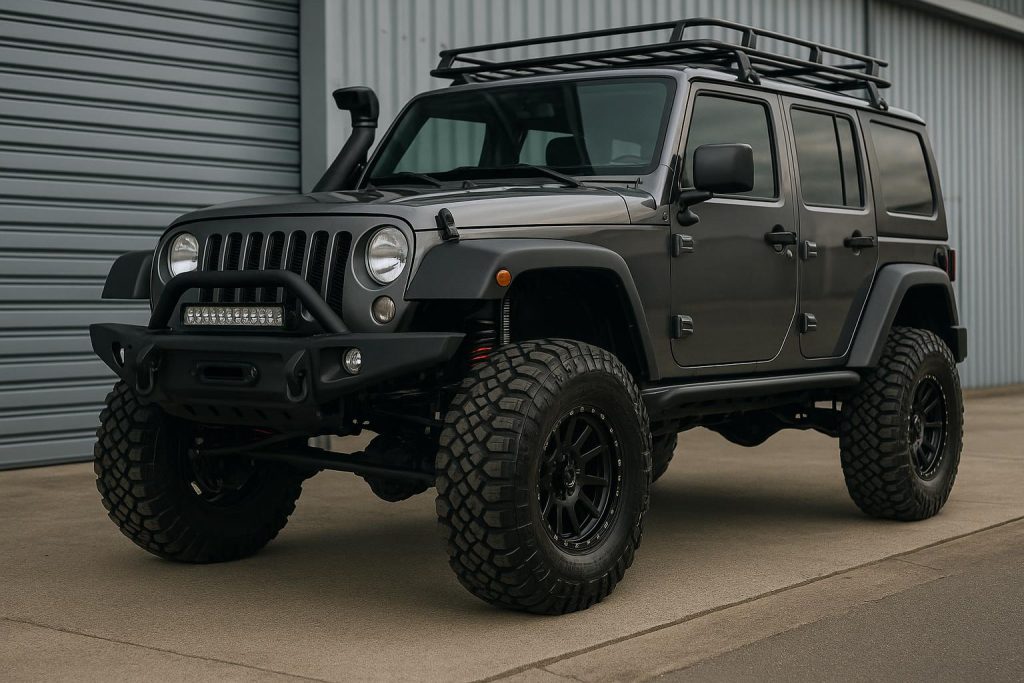
Melbourne’s northeastern suburbs, spanning the areas of Banyule, Nillumbik, and the Yarra Ranges beyond, offer some of the most accessible off-road and gravel driving in any Australian capital city. The sealed road ends and the fire tracks begin less than an hour from the CBD in many directions, and the 4WD community that has grown up around this proximity is active, knowledgeable, and consistently among the most engaged in the country. A lift kit is one of the most significant modifications a 4WD owner can make, and the Melbourne market has specific considerations, from road compliance requirements to the local terrain, that make this decision worth approaching carefully.
What a Lift Kit Actually Does
A lift kit increases the distance between a vehicle’s chassis and the ground, commonly called ground clearance, by modifying the suspension geometry. The practical effects are substantial and interconnected.
Greater ground clearance means the vehicle can navigate larger obstacles, whether rocks, roots, or raised fire track crowns, without the chassis or drivetrain components making contact with the ground. This is the most obvious benefit and the one that most buyers cite as their primary motivation.
Increased suspension travel results from most lift kit configurations, particularly those that replace factory shock absorbers with longer aftermarket units. Greater travel allows each wheel to move through a larger arc before the suspension reaches its limit, which improves the vehicle’s ability to maintain tyre contact with uneven ground and delivers better ride quality on corrugated tracks.
Larger tyre fitment becomes possible once a vehicle has been lifted, because the additional clearance between the tyre and the wheel arch allows a bigger overall diameter without rubbing. Larger tyres further increase ground clearance and generally improve off-road traction, and for many owners the combination of lift kit and tyre upgrade is where the real-world capability improvement is felt most directly.
The lift kit market divides broadly into two categories. Spacer lifts, sometimes called budget lifts, use polyurethane or aluminium spacers to create additional clearance above the factory suspension components. They are cost-effective and relatively simple to install but do not improve suspension travel or ride quality, and in some configurations can create additional stress on factory components. Suspension lifts replace the factory components with purpose-designed aftermarket equivalents that provide additional travel, improved ride quality, and longer service life.
Victorian Compliance: The Rules Melbourne 4WD Owners Need to Follow
Victoria has specific rules governing vehicle modifications, and lift kits that exceed certain thresholds require engineering certification before the vehicle can legally be driven on public roads.
Under current Victorian Road Safety legislation and Vehicle Standards Information sheets published by VicRoads, a suspension lift of up to 50mm does not require engineering certification on most light vehicles. Lifts between 50mm and 150mm require certification from a licensed automotive engineer, and lifts exceeding 150mm are not permissible on vehicles used on public roads.
These rules apply to the combined effect of all modifications affecting ride height, including suspension lifts, body lifts, and tyre diameter increases beyond a specified range. Melbourne 4WD owners who combine a suspension lift with oversized tyres and a body lift need to account for the cumulative effect, not just the suspension component in isolation.
The practical implication for most Banyule and Nillumbik area owners who want compliance without engineering certification is that a 40mm to 50mm suspension lift, paired with appropriately sized tyres, represents the most accessible path to meaningful capability improvement.
According to VicRoads Vehicle Standards Information, the modification rules for light vehicles in Victoria are designed to maintain safety standards while accommodating the genuine off-road use patterns of a large community of 4WD enthusiasts.
The team at lift kits for sale at AutoCraze provides guidance on compliance-friendly lift configurations for Victorian 4WD owners and stocks a range of options suited to the most popular platforms in the Melbourne market. A representative noted: “A lot of Melbourne buyers want real off-road capability but also need the vehicle to comply for daily driving in the city. The 40 to 50mm range is where we see the most activity, because it delivers a meaningful improvement without requiring engineering sign-off.”
Choosing the Right Kit for Melbourne’s Terrain
The northeastern Melbourne region encompasses several distinct terrain types that influence what a lift kit needs to deliver.
Lower Plenty, Hurstbridge, and the Plenty Gorge area. Characterised by compacted clay and loam tracks that become extremely slippery when wet, this zone calls for a suspension lift paired with a mud-terrain or aggressive all-terrain tyre.
Kinglake and the Yarra Ranges. Steeper terrain with more rock exposure calls for a lift that provides genuine articulation improvement alongside clearance increase. This is where the difference between a spacer lift and a quality suspension lift becomes most apparent.
Toolangi and Murrindindi. Remote enough that a breakdown carries real consequences, this area rewards investing in a reliable, well-engineered lift rather than the cheapest available option.
A 4WD Action Australia review of suspension lift options for Melbourne-region terrain highlights that local conditions favour a bias toward articulation and reliability over outright ground clearance, reflecting the specific character of the tracks available to most Melbourne-based enthusiasts.
Installation and Ongoing Maintenance
A lift kit is a mechanical modification to a safety-critical system, and installation quality matters as much as component quality.
Professional installation by a workshop experienced with the specific platform and kit combination ensures components are fitted correctly, alignment is set appropriately for the new suspension geometry, and any secondary adjustments required, such as a differential drop or extended brake lines, are addressed. A poorly installed lift can introduce vibration, premature tyre wear, and handling characteristics worse than factory.
Post-installation alignment is not optional. Lifting a vehicle changes the steering and suspension geometry in ways that affect tyre wear and handling. An alignment check after any suspension modification is an essential part of completing the work correctly.
For Melbourne 4WD owners in the Banyule and Nillumbik area, a properly chosen and installed lift kit represents one of the most worthwhile investments in a vehicle’s capability.