


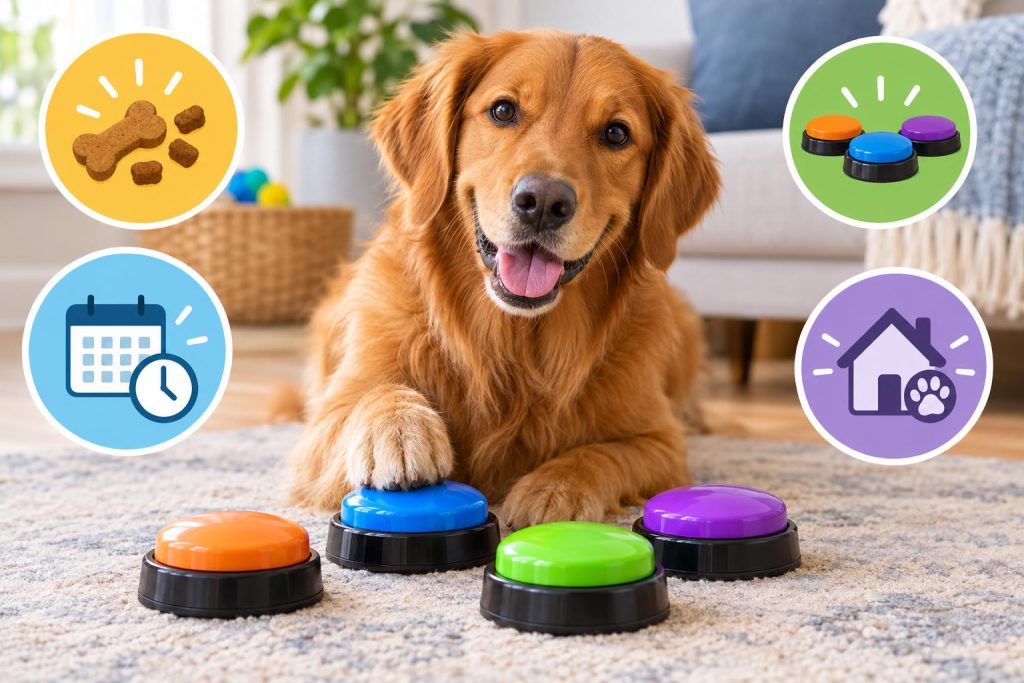
Due to their nature, dogs are incapable of showing their feelings and needs expressively, making it quite hard to know exactly their demands. Fortunately, there’s a very special device designed to address this problem: the speech buttons. They are tools that when pressed explicitly tells you their needs with a word (e.g. water, play). However, this can be pretty hard to teach, especially with the many necessary buttons whilst going through your day-to-day life at home. Before moving into a modern condo like Wynwood Grand, confirm official pet policies with the building administration first. Here are 4 tips to help train your dog to learn the speech buttons as soon as possible.
Start One at a Time
Starting out with multiple buttons only delays their time to fully understand the device. They can confuse words with one another and appear as though what it’s asking for is already there. So, teach one variation at a time, don’t rush it and trust the process. Don’t worry about spending more of your time teaching the second and upcoming actions, as your pet will have already gained pre-knowledge about how buttons work and only need to understand what reward it gets from which, speeding up the process.
Use General and Motivating Words First
General, exciting and familiar terms/words you say most often to your dog like play, water, and food are much easier to comprehend and understand when training your pet to use the speech buttons. Only after mastering the basics should you progress efficiently to more intermediate or difficult expressions.
Let the Needs Start Empty
At first, do not provide the need yet so you can apply them as a reward. Suppose you are aiming to train your dog to ask for water (avoid using buttons that stimulate consumption at first to prevent excessive button mashing instead of meaningful communication), avoid constantly filling their bowl when they are finished with it. This way, you can gently guide their paw onto the button and when pressed you reward them with clean water to drink.
Station the Buttons Permanently
You shouldn’t just place the button in front of them when teaching, which can rewire their spatial awareness, frustrates your dog, and associates it as more of a toy when loose. Station your buttons wisely in a convenient, consistent, and accessible place that doesn’t shallow out sound so you can always hear it. Firmly secure this new spot with a foam mat or tile, non-slip pads, or anything else that’s reliable to prevent sliding and missing it.